Xylitol and Health Effects That Come With It
Finn Shafts
Introduction
Xylitol, derived from the greek word Xylit for wood, was discovered by German chemist Emil Fischer and
his assistant Rudolf Stahel in 1890. Xylitol is synthesized from xylem-rich materials such as birch wood
and beech wood. Xylitol can also be found in some fruits and berries. It is a chemical compound with the
formula C5H12O5, or HO(CH2)(CHOH)3(CH2)OH, making xylitol a naturally occurring five-carbon sugar polyol
(Fig 1). Xylitol is colorless, sweet, and has a crystalline structure (Fig 2). Over the years xylitol
has been used as a sweetener, as it is around the same sweetness of sugar, but at half the caloric
energy. Xylitol has been approved by 35 countries as safe for commercial consumption, and is commonly
found in sugar-free gum, tooth paste, syrups, and many other products.
 Figure 1
|
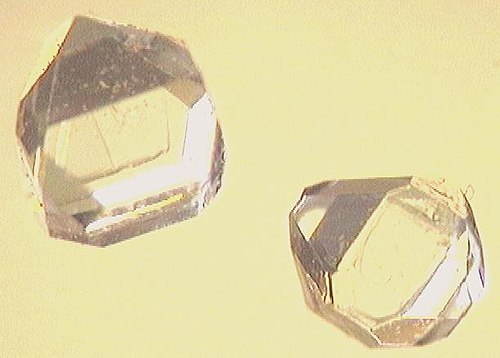 Figure 2
|
Health Benefits and How it Works
Xylitol has been shown to improve dental health. Xylitol does this by reducing levels of mutans streptococci (MS)
in plaque and saliva by disrupting their energy production processes. This causes a lack of energy, and eventually
cell death. In addition, xylitol reduces the adhesion of these microorganisms to your teeth, and reduces the acid
production potential which can demineralize your teeth. In terms of bacterial growth, xylitol is nonfermentable, meaning it
does not support oral bacterial growth. There has been a shown decrease in MS levels as well as plaque levels on
teeth with continual use. Xylitol increases salivary flow as well. This promotes mineralization of the teeth.
Mineralization often referred to as remineralization is a natural repair process for the teeth. This process takes
calcium phosphate molecules from the saliva, and deposits the molecules in the outer protective layer of your teeth
called enamel. When your teeth are disproportionately demineralized by bacteria and microorganisms, you will develop cavities.
The way xylitol actually works for inhibiting bacterial growth starts when a Streptococcus mutans transports the xylitol
into the cell. Then, xylitol is converted into xylitol-5-phosphate via phosphoenolpyruvate: fructose phosphotransferase
system by S. mutans. This forms intracellular vacuoles, leading to cell degradation. Next the Streptococcus mutans attempt
to create energy by dephosphorylatizing the xylitol-5-phosphate. However, this uses Streptococcus mutans' energy, which it
does not gain back. Thus starving the bacteria of energy, leading to death.
Xylitol alcohol has been shown to have an effect on the growth of S. pneumonia and S. mitis, forms of nasopharyngeal bacteria.
This affects their role in nasopharyngeal pneumonia for the benefit of the xylitol consumer.
According to a study conducted on children in Montreal, showed a decrease
in dental caries’ development after 24 months of use compared to children who did not. The risk of dental caries has
shown to decrease by 59%. The children also showed a higher level of mineralization of the teeth during the study.
A second study was conducted on the effects of consuming 11.7g/day. The conclusion was a reduction in carcinogenic
microorganisms such as S. mutans and S. sobrinus in school children.
In a third study, xylitol additives in tooth paste were used in comparison to a control group which only had fluoride.
The results displayed a reduction in dental caries (cariostatic development). In addition, it was found that the
addition of xylitol to the fluoride ions protected tooth enamel, increasing the effectiveness of salivary remineralization.
Health Detriments
Despite the overwhelming amount of health benefits, there are multiple health detriments as well.
One study funded by NIH and directed by Dr. Stanley Hazen showed an increase in cardiovascular risks.
When observing the levels of xylitol in people, compared to cardiovascular health, it was shown that people
with the highest levels of xylitol were 50% more likely to have a cardiovascular event in the following three years.
They found xylitol to increase blood clotting from platelets, by increasing the clot speed and increasing
the chance a clot will form. These findings showed an increase in the risk of heart attacks and strokes, which
are not optimal for human health.
Conclusion
Although there are numerous benefits to the consumption of Xylitol such as with dental health, there are
also considerable downsidesand dangers associated with it. Since its discovery, people have been consuming it,
sometimes even without the knowledge of doing so, with limited research done. However, it would appear that the
health detriments are quite a consideration when deciding to consume Xylitol; possible outweighing the benefits.